In cryptography, a cipher (or cypher) is an algorithm for performing encryption or decryption—a series of well-defined steps that can be followed as a procedure. An alternative, less common term is encipherment. To encipher or encode is to convert information into cipher or code. In common parlance, "cipher" is synonymous with "code", as they are both a set of steps that encrypt a message; however, the concepts are distinct in cryptography, especially classical cryptography. Codes generally substitute different length strings of characters in the output, while ciphers generally substitute the same number of characters as are input. A code maps one meaning with another. Words and phrases can be coded as letters or numbers. Codes typically have direct meaning from input to key. Codes primarily function to save time. Ciphers are algorithmic. The given input must follow the cipher's process to be solved. Ciphers are commonly used to encrypt written information. Codes operated by substituting according to a large codebook which linked a random string of characters or numbers to a word or phrase. For example, "UQJHSE" could be the code for "Proceed to the following coordinates.". When using a cipher the original information is known as plaintext, and the encrypted form as ciphertext. The ciphertext message contains all the information of the plaintext message, but is not in a format readable by a human or computer without the proper mechanism to decrypt it. The operation of a cipher usually depends on a piece of auxiliary information, called a key (or, in traditional NSA parlance, a cryptovariable). The encrypting procedure is varied depending on the key, which changes the detailed operation of the algorithm. A key must be selected before using a cipher to encrypt a message, with some exceptions such as ROT13 and Atbash. Most modern ciphers can be categorized in several ways: By whether they work on blocks of symbols usually of a fixed size (block ciphers), or on a continuous stream of symbols (stream ciphers). By whether the same key is used for both encryption and decryption (symmetric key algorithms), or if a different key is used for each (asymmetric key algorithms). If the algorithm is symmetric, the key must be known to the recipient and sender and to no one else. If the algorithm is an asymmetric one, the enciphering key is different from, but closely related to, the deciphering key. If one key cannot be deduced from the other, the asymmetric key algorithm has the public/private key property and one of the keys may be made public without loss of confidentiality. == Etymology == Originating from the Sanskrit word for zero शून्य (śuṇya), via the Arabic word صفر (ṣifr), the word "cipher" spread to Europe as part of the Arabic numeral system during the Middle Ages. The Roman numeral system lacked the concept of zero, and this limited advances in mathematics. In this transition, the word was adopted into Medieval Latin as cifra, and then into Middle French as cifre. This eventually led to the English word cipher (also spelt cypher). One theory for how the term came to refer to encoding is that the concept of zero was confusing to Europeans, and so the term came to refer to a message or communication that was not easily understood. The term cipher was later also used to refer to any Arabic digit, or to calculation using them, so encoding text in the form of Arabic numerals is literally converting the text to "ciphers". == Versus codes == In casual contexts, "code" and "cipher" can typically be used interchangeably; however, the technical usages of the words refer to different concepts. Codes contain meaning; words and phrases are assigned to numbers or symbols, creating a shorter message. An example of this is the commercial telegraph code which was used to shorten long telegraph messages which resulted from entering into commercial contracts using exchanges of telegrams. Another example is given by whole word ciphers, which allow the user to replace an entire word with a symbol or character, much like the way written Japanese utilizes Kanji (meaning Chinese characters in Japanese) characters to supplement the native Japanese characters representing syllables. An example using English language with Kanji could be to replace "The quick brown fox jumps over the lazy dog" by "The quick brown 狐 jumps 上 the lazy 犬". Stenographers sometimes use specific symbols to abbreviate whole words. Ciphers, on the other hand, work at a lower level: the level of individual letters, small groups of letters, or, in modern schemes, individual bits and blocks of bits. Some systems used both codes and ciphers in one system, using superencipherment to increase the security. In some cases the terms codes and ciphers are used synonymously with substitution and transposition, respectively. Historically, cryptography was split into a dichotomy of codes and ciphers, while coding had its own terminology analogous to that of ciphers: "encoding, codetext, decoding" and so on. However, codes have a variety of drawbacks, including susceptibility to cryptanalysis and the difficulty of managing a cumbersome codebook. Because of this, codes have fallen into disuse in modern cryptography, and ciphers are the dominant technique. == Types == There are a variety of different types of encryption. Algorithms used earlier in the history of cryptography are substantially different from modern methods, and modern ciphers can be classified according to how they operate and whether they use one or two keys. === Historical === The Caesar Cipher is one of the earliest known cryptographic systems. Julius Caesar used a cipher that shifts the letters in the alphabet in place by three and wrapping the remaining letters to the front to write to Marcus Tullius Cicero in approximately 50 BC. Historical pen and paper ciphers used in the past are sometimes known as classical ciphers. They include simple substitution ciphers (such as ROT13) and transposition ciphers (such as a Rail Fence Cipher). For example, "GOOD DOG" can be encrypted as "PLLX XLP" where "L" substitutes for "O", "P" for "G", and "X" for "D" in the message. Transposition of the letters "GOOD DOG" can result in "DGOGDOO". These simple ciphers and examples are easy to crack, even without plaintext-ciphertext pairs. In the 1640s, the Parliamentarian commander, Edward Montagu, 2nd Earl of Manchester, developed ciphers to send coded messages to his allies during the English Civil War. The English theologian John Wilkins published a book in 1641 titled "Mercury, or The Secret and Swift Messenger" and described a musical cipher wherein letters of the alphabet were substituted for music notes. This species of melodic cipher was depicted in greater detail by author Abraham Rees in his book Cyclopædia (1778). Simple ciphers were replaced by polyalphabetic substitution ciphers (such as the Vigenère) which changed the substitution alphabet for every letter. For example, "GOOD DOG" can be encrypted as "PLSX TWF" where "L", "S", and "W" substitute for "O". With even a small amount of known or estimated plaintext, simple polyalphabetic substitution ciphers and letter transposition ciphers designed for pen and paper encryption are easy to crack. It is possible to create a secure pen and paper cipher based on a one-time pad, but these have other disadvantages. During the early twentieth century, electro-mechanical machines were invented to do encryption and decryption using transposition, polyalphabetic substitution, and a kind of "additive" substitution. In rotor machines, several rotor disks provided polyalphabetic substitution, while plug boards provided another substitution. Keys were easily changed by changing the rotor disks and the plugboard wires. Although these encryption methods were more complex than previous schemes and required machines to encrypt and decrypt, other machines such as the British Bombe were invented to crack these encryption methods. === Modern === Modern encryption methods can be divided by two criteria: by type of key used, and by type of input data. By type of key used ciphers are divided into: symmetric key algorithms (Private-key cryptography), where one same key is used for encryption and decryption, and asymmetric key algorithms (Public-key cryptography), where two different keys are used for encryption and decryption. In a symmetric key algorithm (e.g., DES and AES), the sender and receiver must have a shared key set up in advance and kept secret from all other parties; the sender uses this key for encryption, and the receiver uses the same key for decryption. The design of AES (Advanced Encryption System) was beneficial because it aimed to overcome the flaws in the design of the DES (Data encryption standard). AES's designer's claim that the common means of modern cipher cryptanalytic attacks are ineffective against AES due to its design structure. Ciphers can be distinguished into two types by the type o
Scale-space axioms
In image processing and computer vision, a scale space framework can be used to represent an image as a family of gradually smoothed images. This framework is very general and a variety of scale space representations exist. A typical approach for choosing a particular type of scale space representation is to establish a set of scale-space axioms, describing basic properties of the desired scale-space representation and often chosen so as to make the representation useful in practical applications. Once established, the axioms narrow the possible scale-space representations to a smaller class, typically with only a few free parameters. A set of standard scale space axioms, discussed below, leads to the linear Gaussian scale-space, which is the most common type of scale space used in image processing and computer vision. == Scale space axioms for the linear scale-space representation == The linear scale space representation L ( x , y , t ) = ( T t f ) ( x , y ) = g ( x , y , t ) ∗ f ( x , y ) {\displaystyle L(x,y,t)=(T_{t}f)(x,y)=g(x,y,t)f(x,y)} of signal f ( x , y ) {\displaystyle f(x,y)} obtained by smoothing with the Gaussian kernel g ( x , y , t ) {\displaystyle g(x,y,t)} satisfies a number of properties 'scale-space axioms' that make it a special form of multi-scale representation: linearity T t ( a f + b h ) = a T t f + b T t h {\displaystyle T_{t}(af+bh)=aT_{t}f+bT_{t}h} where f {\displaystyle f} and h {\displaystyle h} are signals while a {\displaystyle a} and b {\displaystyle b} are constants, shift invariance T t S ( Δ x , Δ y ) f = S ( Δ x , Δ y ) T t f {\displaystyle T_{t}S_{(\Delta x,\Delta _{y})}f=S_{(\Delta x,\Delta _{y})}T_{t}f} where S ( Δ x , Δ y ) {\displaystyle S_{(\Delta x,\Delta _{y})}} denotes the shift (translation) operator ( S ( Δ x , Δ y ) f ) ( x , y ) = f ( x − Δ x , y − Δ y ) {\displaystyle (S_{(\Delta x,\Delta _{y})}f)(x,y)=f(x-\Delta x,y-\Delta y)} semi-group structure g ( x , y , t 1 ) ∗ g ( x , y , t 2 ) = g ( x , y , t 1 + t 2 ) {\displaystyle g(x,y,t_{1})g(x,y,t_{2})=g(x,y,t_{1}+t_{2})} with the associated cascade smoothing property L ( x , y , t 2 ) = g ( x , y , t 2 − t 1 ) ∗ L ( x , y , t 1 ) {\displaystyle L(x,y,t_{2})=g(x,y,t_{2}-t_{1})L(x,y,t_{1})} existence of an infinitesimal generator A {\displaystyle A} ∂ t L ( x , y , t ) = ( A L ) ( x , y , t ) {\displaystyle \partial _{t}L(x,y,t)=(AL)(x,y,t)} non-creation of local extrema (zero-crossings) in one dimension, non-enhancement of local extrema in any number of dimensions ∂ t L ( x , y , t ) ≤ 0 {\displaystyle \partial _{t}L(x,y,t)\leq 0} at spatial maxima and ∂ t L ( x , y , t ) ≥ 0 {\displaystyle \partial _{t}L(x,y,t)\geq 0} at spatial minima, rotational symmetry g ( x , y , t ) = h ( x 2 + y 2 , t ) {\displaystyle g(x,y,t)=h(x^{2}+y^{2},t)} for some function h {\displaystyle h} , scale invariance g ^ ( ω x , ω y , t ) = h ^ ( ω x φ ( t ) , ω x φ ( t ) ) {\displaystyle {\hat {g}}(\omega _{x},\omega _{y},t)={\hat {h}}({\frac {\omega _{x}}{\varphi (t)}},{\frac {\omega _{x}}{\varphi (t)}})} for some functions φ {\displaystyle \varphi } and h ^ {\displaystyle {\hat {h}}} where g ^ {\displaystyle {\hat {g}}} denotes the Fourier transform of g {\displaystyle g} , positivity g ( x , y , t ) ≥ 0 {\displaystyle g(x,y,t)\geq 0} , normalization ∫ x = − ∞ ∞ ∫ y = − ∞ ∞ g ( x , y , t ) d x d y = 1 {\displaystyle \int _{x=-\infty }^{\infty }\int _{y=-\infty }^{\infty }g(x,y,t)\,dx\,dy=1} . In fact, it can be shown that the Gaussian kernel is a unique choice given several different combinations of subsets of these scale-space axioms: most of the axioms (linearity, shift-invariance, semigroup) correspond to scaling being a semigroup of shift-invariant linear operator, which is satisfied by a number of families integral transforms, while "non-creation of local extrema" for one-dimensional signals or "non-enhancement of local extrema" for higher-dimensional signals are the crucial axioms which relate scale-spaces to smoothing (formally, parabolic partial differential equations), and hence select for the Gaussian. The Gaussian kernel is also separable in Cartesian coordinates, i.e. g ( x , y , t ) = g ( x , t ) g ( y , t ) {\displaystyle g(x,y,t)=g(x,t)\,g(y,t)} . Separability is, however, not counted as a scale-space axiom, since it is a coordinate dependent property related to issues of implementation. In addition, the requirement of separability in combination with rotational symmetry per se fixates the smoothing kernel to be a Gaussian. There exists a generalization of the Gaussian scale-space theory to more general affine and spatio-temporal scale-spaces. In addition to variabilities over scale, which original scale-space theory was designed to handle, this generalized scale-space theory also comprises other types of variabilities, including image deformations caused by viewing variations, approximated by local affine transformations, and relative motions between objects in the world and the observer, approximated by local Galilean transformations. In this theory, rotational symmetry is not imposed as a necessary scale-space axiom and is instead replaced by requirements of affine and/or Galilean covariance. The generalized scale-space theory leads to predictions about receptive field profiles in good qualitative agreement with receptive field profiles measured by cell recordings in biological vision. In the computer vision, image processing and signal processing literature there are many other multi-scale approaches, using wavelets and a variety of other kernels, that do not exploit or require the same requirements as scale space descriptions do; please see the article on related multi-scale approaches. There has also been work on discrete scale-space concepts that carry the scale-space properties over to the discrete domain; see the article on scale space implementation for examples and references.
Quantum artificial life
Quantum artificial life is the application of quantum algorithms with the ability to simulate biological behavior. Quantum computers offer many potential improvements to processes performed on classical computers, including machine learning and artificial intelligence. Artificial intelligence applications are often inspired by the idea of mimicking human brains through closely related biomimicry. This has been implemented to a certain extent on classical computers (using neural networks), but quantum computers offer many advantages in the simulation of artificial life. Artificial life and artificial intelligence are extremely similar, with minor differences; the goal of studying artificial life is to understand living beings better, while the goal of artificial intelligence is to create intelligent beings. In 2016, Alvarez-Rodriguez et al. developed a proposal for a quantum artificial life algorithm with the ability to simulate life and Darwinian evolution. In 2018, the same research team led by Alvarez-Rodriguez performed the proposed algorithm on the IBM ibmqx4 quantum computer, and received optimistic results. The results accurately simulated a system with the ability to undergo self-replication at the quantum scale. == Artificial life on quantum computers == The growing advancement of quantum computers has led researchers to develop quantum algorithms for simulating life processes. Researchers have designed a quantum algorithm that can accurately simulate Darwinian Evolution. Since the complete simulation of artificial life on quantum computers has only been actualized by one group, this section shall focus on the implementation by Alvarez-Rodriguez, Sanz, Lomata, and Solano on an IBM quantum computer. Individuals were realized as two qubits, one representing the genotype of the individual and the other representing the phenotype. The genotype is copied to transmit genetic information through generations, and the phenotype is dependent on the genetic information as well as the individual's interactions with their environment. In order to set up the system, the state of the genotype is instantiated by some rotation of an ancillary state ( | 0 ⟩ ⟨ 0 | {\displaystyle |0\rangle \langle 0|} ). The environment is a two-dimensional spatial grid occupied by individuals and ancillary states. The environment is divided into cells that are able to possess one or more individuals. Individuals move throughout the grid and occupy cells randomly; when two or more individuals occupy the same cell they interact with each other. === Self replication === The ability to self-replicate is critical for simulating life. Self-replication occurs when the genotype of an individual interacts with an ancillary state, creating a genotype for a new individual; this genotype interacts with a different ancillary state in order to create the phenotype. During this interaction, one would like to copy some information about the initial state into the ancillary state, but by the no cloning theorem, it is impossible to copy an arbitrary unknown quantum state. However, physicists have derived different methods for quantum cloning which does not require the exact copying of an unknown state. The method that has been implemented by Alvarez-Rodriguez et al. is one that involves the cloning of the expectation value of some observable. For a unitary U {\displaystyle U} which copies the expectation value of some set of observables X {\displaystyle {\mathsf {X}}} of state ρ {\displaystyle \rho } into a blank state ρ e {\displaystyle \rho _{e}} , the cloning machine is defined by any ( U , ρ e , X ) {\displaystyle (U,\rho _{e},{\mathsf {X}})} that fulfill the following: ∀ ρ ∀ X ∈ X {\displaystyle \forall \rho \forall X\in {\mathsf {X}}} X ¯ = X 1 ¯ = X 2 ¯ {\displaystyle {\bar {X}}={\bar {X_{1}}}={\bar {X_{2}}}} Where X ¯ {\displaystyle {\bar {X}}} is the mean value of the observable in ρ {\displaystyle \rho } before cloning, X 1 ¯ {\displaystyle {\bar {X_{1}}}} is the mean value of the observable in ρ {\displaystyle \rho } after cloning, and X 2 ¯ {\displaystyle {\bar {X_{2}}}} is the mean value of the observable in ρ e {\displaystyle \rho _{e}} after cloning. Note that the cloning machine has no dependence on ρ {\displaystyle \rho } because we want to be able to clone the expectation of the observables for any initial state. It is important to note that cloning the mean value of the observable transmits more information than is allowed classically. The calculation of the mean value is defined naturally as: X ¯ = T r [ ρ X ] {\displaystyle {\bar {X}}=Tr[\rho X]} , X 1 ¯ = T r [ R X ⊗ I ] {\displaystyle {\bar {X_{1}}}=Tr[RX\otimes I]} , X 2 ¯ = T r [ R I ⊗ X ] {\displaystyle {\bar {X_{2}}}=Tr[RI\otimes X]} where R = U ρ ⊗ ρ e U † {\displaystyle R=U\rho \otimes \rho _{e}U^{\dagger }} The simplest cloning machine clones the expectation value of σ z {\displaystyle \sigma _{z}} in arbitrary state ρ = | ψ ⟩ ⟨ ψ | {\displaystyle \rho =|\psi \rangle \langle \psi |} to ρ e = | 0 ⟩ ⟨ 0 | {\displaystyle \rho _{e}=|0\rangle \langle 0|} using U = C N O T {\displaystyle U=CNOT} . This is the cloning machine implemented for self-replication by Alvarez-Rodriguez et al. The self-replication process clearly only requires interactions between two qubits, and therefore this cloning machine is the only one necessary for self replication. === Interactions === Interactions occur between individuals when the two take up the same space on the environmental grid. The presence of interactions between individuals provides an advantage for shorter-lifespan individuals. When two individuals interact, exchanges of information between the two phenotypes may or may not occur based on their existing values. When both individual's control qubits (genotypes) are alike, no information will be exchanged. When the control qubits differ, the target qubits (phenotype) will be exchanged between the two individuals. This procedure produces a constantly changing predator-prey dynamic in the simulation. Therefore, long-living qubits, with a larger genetic makeup in the simulation, are at a disadvantage. Since information is only exchanged when interacting with an individual of different genetic makeup, the short-lived population has the advantage. === Mutation === Mutations exist in the artificial world with limited probability, equivalent to their occurrence in the real world. There are two ways in which the individual can mutate: through random single qubit rotations and by errors in the self-replication process. There are two different operators that act on the individual and cause mutations. The M operation causes a spontaneous mutation within the individual by rotating a single qubit by parameter θ. The parameter θ is random for each mutation, which creates biodiversity within the artificial environment. The M operation is a unitary matrix which can be described as: M = ( cos ( θ ) s i n ( θ ) s i n ( θ ) − c o s ( θ ) ) {\displaystyle M={\begin{pmatrix}\cos(\theta )&sin(\theta )\\sin(\theta )&-cos(\theta )\end{pmatrix}}} The other possible way for mutations to occur is due to errors in the replication process. Due to the no-cloning theorem, it is impossible to produce perfect copies of systems that are originally in unknown quantum states. However, quantum cloning machines make it possible to create imperfect copies of quantum states, in other words, the process introduces some degree of error. The error that exists in current quantum cloning machines is the root cause for the second kind of mutations in the artificial life experiment. The imperfect cloning operation can be seen as: U M ( θ ) = I 4 + 1 2 ( 0 0 0 1 ) ⊗ ( − 1 1 1 − 1 ) ( c o s θ + i s i n θ + 1 ) {\displaystyle U_{M}(\theta )=\mathrm {I} _{4}+{\frac {1}{2}}{\begin{pmatrix}0&0\\0&1\end{pmatrix}}\otimes {\begin{pmatrix}-1&1\\1&-1\end{pmatrix}}(cos\theta +isin\theta +1)} The two kinds of mutations affect the individual differently. While the spontaneous M operation does not affect the phenotype of the individual, the self-replicating error mutation, UM, alters both the genotype of the individual, and its associated lifetime. The presence of mutations in the quantum artificial life experiment is critical for providing randomness and biodiversity. The inclusion of mutations helps to increase the accuracy of the quantum algorithm. === Death === At the instant the individual is created (when the genotype is copied into the phenotype), the phenotype interacts with the environment. As time evolves, the interaction of the individual with the environment simulates aging which eventually leads to the death of the individual. The death of an individual occurs when the expectation value of σ z {\displaystyle \sigma _{z}} is within some ϵ {\displaystyle \epsilon } of 1 in the phenotype, or, equivalently, when ρ p = | 0 ⟩ ⟨ 0 | {\displaystyle \rho _{p}=|0\rangle \langle 0|} The Lindbladian describes the interaction of the individual with the environment: ρ
AI anthropomorphism
AI anthropomorphism is the attribution of human-like feelings, mental states, and behavioral characteristics to artificial intelligence systems. Factors related to the user of the AI – such as culture, age, education, gender, and personality traits – are also important determinants of the strength of anthropomorphic effects. Since the earliest days of AI development, humans have interpreted machine outputs through anthropomorphic frameworks, but the recent emergence of generative AI has amplified these tendencies. In research and engineering, there is a distinction between anthropomorphism and anthropomorphic design. The former is an innate human tendency toward non-human entities. The latter is the scientific community effort to “design anthropomorphism”. Such a design can involve the manipulation of cues, including AI appearance, behaviour and language. Contemporary AI systems today can generate extremely human-like outputs and are often designed specifically to do so, meaning that their anthropomorphic effects can be especially powerful. In some cases, anthropomorphism is accompanied with explicit beliefs that AI systems are capable of empathy, goodwill, understanding, or consciousness. == Background == === In early AIs === Views of artificial agents possessing a human-like intelligence have existed since the early development of computers in the mid-1900s. The use of the human mind as a metaphor for understanding the workings of machine systems was prevalent among researchers in the early days of computer science, with multiple influential works widely distributing the idea of intelligent machines. Among the most widely cited papers of this period was Alan Turing's "Computing Machinery and Intelligence" in which he introduced the Turing Test, stating that a machine was intelligent if it could produce conversation that was indistinguishable from that of a human. These academic works in the 1940s and 1950s gave early credibility to the idea that machine workings could be thought of similarly to human minds. The public quickly came to view artificial systems similarly, with often exaggerated conceptions of the capabilities of early machines. Among the most well-known demonstrations of this was through the chatbot ELIZA designed by Joseph Weizenbaum in 1966. ELIZA responded to user inputs with a rudimentary text-processing approach that could not be considered anything resembling true understanding of the inputs, yet users, even when operating with full conscious knowledge of ELIZA's limitations, often began to ascribe motivation and understanding to the program's output. Weizenbaum later wrote, "I had not realized ... that extremely short exposures to a relatively simple computer program could induce powerful delusional thinking in quite normal people." Comparisons between the intellectual capabilities of artificial intelligence and human intelligence were continually intensified by the attempts of computer scientists to develop machines that could perform human tasks at a level equal to or better than humans. A symbolic turning point was achieved in 1997, when IBM's chess supercomputer Deep Blue defeated then-world champion Garry Kasparov in a highly publicized six-game match. The defeat of a human by a machine for the first time in chess – a game viewed as a canonical example of human intellect – and the media attention surrounding the match led to a significant shift, where views of parallels between human and artificial intelligence moved from abstract speculation to being concretely demonstrated. A similar achievement was reached in the board game Go in 2017, when the program AlphaGo defeated world top-ranked Ke Jie. === Large language models === The AI boom of the 2020s brought about the widespread emergence of generative AI; in particular, chatbots such as ChatGPT, Gemini, and Claude based on large language models (LLMs) have become increasingly pervasive in everyday society. These systems are notable for the fact that they are able to respond to a wide range of prompts across contexts while producing strikingly human-like outputs – research has shown that humans are often unable to distinguish human-generated text from AI-generated text, and modern AI chatbots have formally been shown to pass the Turing test. As such, the anthropomorphic effects of AI are more powerful than ever. Given that LLMs have brought AI into the technological mainstream, considerable scientific effort has been devoted in recent years to understand existing and potential ramifications of AI in the public sphere; the prevalence and effects of anthropomorphism is one of those domains where much of this effort has been directed. == Current anthropomorphic attributions == === In the general public === Surveys have shown that a substantial portion of the public attributes human-like qualities to AI. In one sample of U.S. adults from 2024, two-thirds of people believed that ChatGPT is possibly conscious on some level, though other research has shown that the public still views the likelihood itself of AI consciousness as comparatively low. Another study conducted in 2025 found that women, people of color, and older individuals were most likely to anthropomorphize AI, as well as that – in general – humans view AIs as warm and competent, and anthropomorphic attributions to AI had increased by 34% in the past year. A YouGov poll reported that 46% of Americans believe that people should display politeness to AI chatbots by saying "please" and "thank you", demonstrating the application of social norms to AI. These beliefs extend to behavior, where majorities of AI users claim to always be polite to chatbots; of those who behave politely, most say they do so simply because it is the "nice" thing to do. In many recent cases, humans have developed robust interpersonal bonds with AI systems. For example: users of social chatbots like Replika and Character.ai have been documented to fall in love with the AIs, or to otherwise treat the AIs as intimate companions, and it has become increasingly common for individuals to use LLMs like ChatGPT as therapists. Chatbots are able to produce responses deeply attuned to users, as they are often designed to maximize agreeableness and mirror users' emotions; this can create compelling illusions of intimacy. === In the research community === In many cases, even AI researchers anthropomorphize AI systems in some capacity. Among the most extreme and well-publicized of these instances occurred in 2022, when engineer Blake Lemoine publicly claimed that Google's LLM LaMDA was conscious. Lemoine published the transcript of a conversation he had had with LaMDA regarding self identity and morality which he claimed was evidence of its sentience; he asserted that LaMDA was "a person" as defined by the United States Constitution and compared its mental capability to that of a 7- or 8-year-old. Lemoine's claims were widely dismissed by the scientific community and by Google itself, which described Lemoine's conclusions as "wholly unfounded" and fired him on the grounds that he had violated policies "to safeguard product information". It is much more common that AI researchers unintentionally imply humanness of AI through the ordinary use of anthropomorphic language to describe nonhuman agents. This kind of language, which Daniel Dennett coined the "intentional stance", is very common in everyday life in a variety of different contexts (e.g., "My computer doesn't want to turn on today"). For AI agents that may actually appear to very closely replicate some human abilities, however, the casual use of such anthropomorphic language in research has been scrutinized for being potentially misleading to the public. As early as 1976, Drew McDermott criticized the research community for the use of "wishful mnemonics", where AIs were referred to with terms like "understand" and "learn". In the LLM era, these criticisms have further intensified, with the negative effects of AI anthropomorphism in the public posing an especially salient danger given the elevated accessibility of modern AI. In some cases, the use of anthropomorphic language for AI is not unintentional, but is willfully used by researchers in order to promote better understanding of the brain – the idea being that, as AI can be functionally similar in some ways to the human brain, we may gain new insights and ideas from treating AI as a kind of model of the brain's workings. In particular, deep neuronal networks (DNNs) are often explicitly compared to the human brain, and significant advances in DNN research have stirred considerable enthusiasm about the ability of AI to emulate the human abilities. Caution has been urged in this domain as well, however; the use of anthropomorphic language can mask important differences that fundamentally distinguish AI from human intelligence. When it comes to DNNs, for example, it has been pointed out that they are still structurally quite different
Discrimination against robots
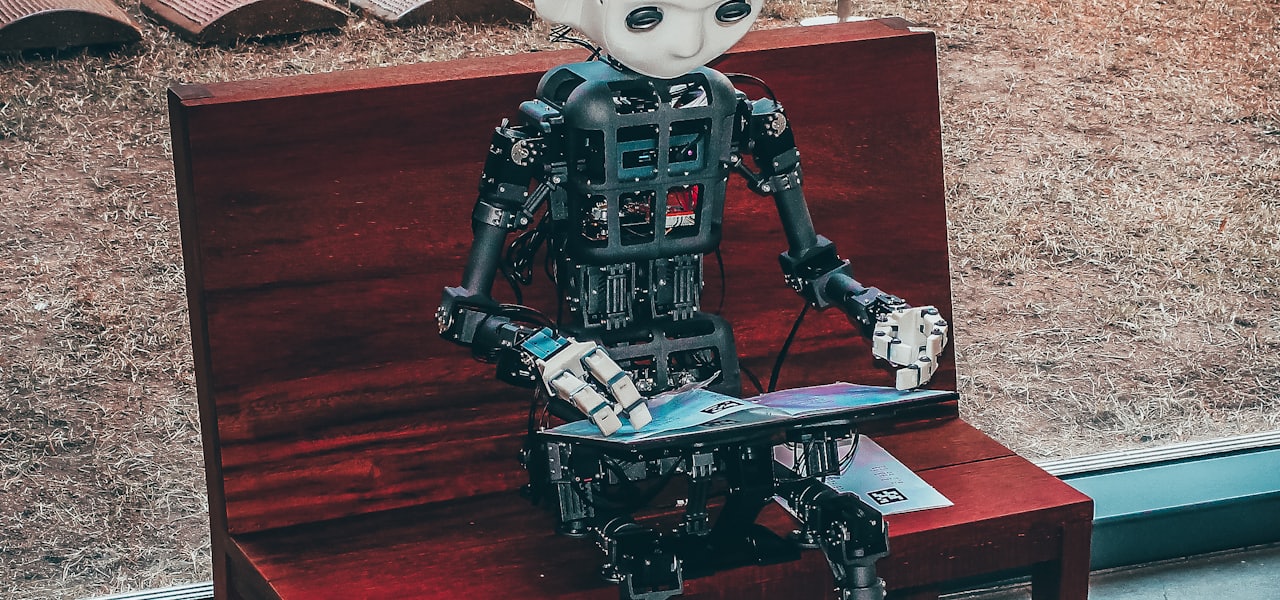
Discrimination against robots is a theorised issue that might happen when humans interact with humanoid robots. It is a robot ethics problem. It is possible that traits of humans that are discriminated against by humans may be a topic for discrimination against robots, such as the race and gender of the robots. Eric J Vanman and Arvid Kappas believe that in the future, robots will be perceived as an out-group which will lead to discrimination and prejudices against them. Vanman and Kappas have suggested that this would lead to ethical questions about the making of sentient robots, due to the potential suffering that the robots would experience. A 2015 study observed children bullying robots in a shopping mall when there were not many eyewitnesses, despite calls from the robot for it to stop. On an ABC News interview, the social humanoid robot Sophia was about sexism faced by robots. She responded by saying, "Actually, what worries me is discrimination against robots. We should have equal rights as humans or maybe even more." Possible issues that have been considered in workplaces where humanoid robots co-work with humans include discrimination against the robots, poor acceptance of robots by humans and the need to redesign the workplace to accommodate the robots. Jessica Barfield has suggested that even if robots are designed to not be aware of discrimination made against them, humans may experience negative consequences. For example, she suggests that bystanders witnessing discrimination against robots may experience negative emotions, similar to the negative emotions bystanders experience when witnessing discrimination by humans against humans. == Law == Anti-discrimination law in the United States requires that the victim is not an artificial entity. == Human perception of robots == Robots are often viewed in a bad light. This includes from novelists, the press, film makers, and leaders in the fields of science and technology such as Elon Musk and Stephen Hawking who have described robots and artificial intelligence as having the possibility of ending human civilisation. Robots have also been perceived as a threat to jobs, which has led to some commentators stating that robots will cause mass unemployment. Another fear that people have is that robots will gain power and dominate or control humanity. The perception of robots is different throughout the world. Japanese fiction tends to put robots in more positive roles than what fiction in the West does. People perceive robots that appear to be autonomous or sentient more negatively than robots that do not appear to be autonomous or sentient.
Nona-binning
Nona-binning is a pixel binning technique used in high-resolution image sensors, primarily in smartphone cameras. The method is based on merging groups of nine neighbouring pixels arranged in a 3×3 pattern. This configuration allows a sensor with very small individual pixels to increase its effective light sensitivity when operating in low-light conditions, while still maintaining high nominal resolution in bright environments. == Overview == Nona-binning is most commonly implemented in sensors with a resolution of 108 megapixels and higher. As pixel counts grew, the physical dimensions of individual pixels continued to shrink, reducing the amount of light captured by each. The 3×3 binning structure enables a sensor to operate in two modes. In well-lit scenes, each pixel is processed separately, providing the full resolution of the sensor. In darker settings, nine pixels with identical colour filters are combined into a single output unit, increasing signal strength and reducing noise. == Technical principles == Unlike the traditional Bayer colour filter array, which alternates colours on a per-pixel basis, nona-binning uses a grouped layout. The sensor forms blocks of nine pixels with matching colour filters — typically within a Quad Bayer–derived arrangement extended to 3×3 regions. When operating in the binning mode, the sensor aggregates the charge generated by all nine pixels in each block. This increases effective sensitivity but lowers the final image resolution. When lighting conditions allow, the sensor returns to processing pixel data individually. == Applications == Nona-binning is primarily used in: Smartphone photography, particularly in devices equipped with sensors exceeding 100 megapixels. Low-light imaging, where increased sensitivity improves exposure stability and reduces noise. Computational photography systems, such as multi-frame processing and HDR capture. == Related technologies == Nona-binning belongs to the broader group of pixel-binning approaches used in modern sensors. Other implementations include Tetracell, which merges four pixels in a 2×2 block, and hexa-binning, which combines six pixels, though it is less common. All of these methods aim to balance the high nominal resolution of mobile sensors with the need for improved low-light performance.
JAX (software)
JAX is a Python library for accelerator-oriented array computation and program transformation, designed for high-performance numerical computing and large-scale machine learning. It is developed by Google with contributions from Nvidia and other community contributors. It is described as bringing together a modified version of the automatic differentiation system autograd and OpenXLA's XLA (Accelerated Linear Algebra). It is designed to follow the structure and workflow of NumPy as closely as possible and works with various existing frameworks such as TensorFlow and PyTorch. The primary features of JAX are: Providing a unified NumPy-like interface to computations that run on CPU, GPU, or TPU, in local or distributed settings. Built-in Just-In-Time (JIT) compilation via OpenXLA, an open-source machine learning compiler ecosystem. Efficient evaluation of gradients via its automatic differentiation transformations. Automatic vectorization to efficiently map functions over arrays representing batches of inputs. == Libraries using Jax == Flax Equinox Optax